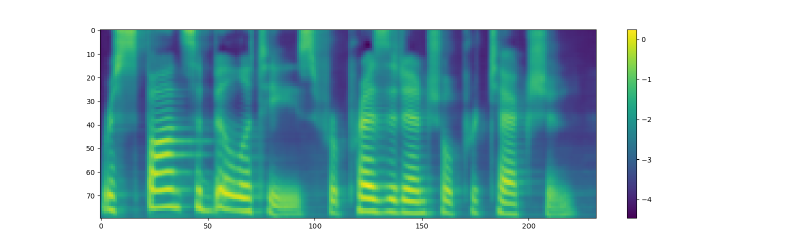
Understanding a modern deep learning model is challenging due to the extensive prior knowledge required and the rapid pace of advancements in the field. In the research project Intercambios Transorgánicos, we are working with TTS, specifically the FastPitch model from Nvidia. I have studied this model to fine-tune it for Spanish and shared my research process in a class to help my colleagues in the research group understand it better.
Understanding Seq2Seq Models
In Intercambios Transorgánicos, we previously used Tacotron2 as our TTS model. While Tacotron2 performs well, it has several issues, primarily during training and inference, due to its auto-regressive nature. In contrast, FastPitch is a non-auto-regressive (NAR) model. To grasp these distinctions, I delved into seq2seq models, exploring their evolution over time and creating a quick overview of the sequence analysis models that have been pivotal:
- RNN
- LSTM
- Transformers
Tacotron2 is based on an LSTM (AR) model, whereas FastPitch utilizes Transformers (NAR). Understanding this technological progression provides crucial background knowledge, particularly about transformers, including positional encoding, a key factor in their non-auto-regressive nature, and the attention mechanism.
The Transformer Architecture
I began by studying the transformer architecture, as it is fundamental to the FastPitch model. I reviewed online resources and the seminal Attention is All You Need paper. Below are some key points I noted during my study:
Self-Attention Mechanism
- Purpose: Dynamically focuses on different parts of the input sequence.
- Mechanism:
- Query (Q), Key (K), Value (V): Derived from input embeddings.
- Attention scores are computed as the dot product of Q and K, scaled by the square root of the dimension.
- Scores are normalized using softmax to create attention weights.
- A weighted sum of V is computed based on these weights to produce the output.
Multi-Head Attention
- Purpose: Captures diverse relationships between tokens by applying multiple self-attention mechanisms in parallel.
- Mechanism: Outputs from multiple attention heads are concatenated and linearly transformed.
Positional Encoding
- Purpose: Provides information about token order in the sequence, compensating for the Transformer’s lack of built-in sequence order (unlike RNNs).
- Mechanism: A fixed or learnable vector is added to the input embeddings.
Encoder-Decoder Structure
- Encoder: Processes the input sequence into context-rich representations.
- Components:
- Multi-head self-attention
- Feed-forward neural network (FFN)
- Layer normalization and residual connections
- Components:
- Decoder: Generates the output sequence by attending to both encoder outputs and previously generated tokens.
- Components:
- Masked multi-head self-attention (prevents attending to future tokens)
- Multi-head attention over encoder outputs
- FFN, layer normalization, and residual connections
- Components:
- Encoder: Processes the input sequence into context-rich representations.
Feed-Forward Network (FFN)
- Purpose: Introduces non-linearity and processes each token independently.
- Mechanism: Two linear layers with a ReLU activation in between.
Layer Normalization and Residual Connections
- Purpose: Stabilizes training and improves gradient flow by normalizing inputs to each layer and adding skip connections.
FastPitch
After covering the theory, I examined each section of the FastPitch architecture in detail. I provided a brief explanation of word embeddings and positional encoding, as these are complex topics, and I wanted to keep the class concise. FastPitch converts text into mel spectrograms, which are then transformed into audio by another model (in our case, HiFi-GAN). The training sequence involves the following steps:
- Text to Word Embedding
- Word Embedding concatenated with mel spectrogram
- Positional encoding and FFT (Feed-Forward Transformer block)
- Pitch Prediction
- Phoneme Duration Prediction
- Another FFT block
- Fully connected layer
- Output mel spectrogram
For each block, I presented the corresponding equations and provided qualitative explanations for their roles in the model. For instance, phoneme duration prediction is crucial for aligning a phoneme’s duration with the expected duration in the spectrogram.
Online Class
Finally, I summarized the most important points and conducted an online class to share these concepts with my colleagues. You can watch it here (in Spanish):